Edition 56 · 11/7/2026

Is Human Connection the Healing We Need?

Curated by Lucas Campos · Ayurvedese®

Share:
In this edition, we explore how human connection becomes essential in times of advanced technology, highlighting the importance of human touch in healing. Tulsi, a sacred herb, reminds us that ancestral wisdom and modern science can walk together, offering support to our nervous system and well-being. We also discuss the gastric protection provided by Ayurveda's metal-pharmaceuticals, revealing how tradition can be a powerful ally in digestive health. Amid these themes, we reflect on how emotional and mental balance, essential for health, is reinforced by these practices. Shall we embark on this journey of self-discovery and care together? — Lucas
The Essence of the Healer: Why Human Connection is More Important than Ever in the Age of AI
rss:vasantlad

The Essence of the Healer: Why Human Connection is More Important than Ever in the Age of AI

Researchers highlight that in an increasingly technology-dominated world, true healing is based on human connection, presence, and empathy. As artificial intelligence (AI) advances, capable of diagnosing symptoms and performing complex tasks, loneliness and chronic stress become global epidemics. The central message is that the AI revolution should not be seen as a threat, but as an opportunity for human evolution. What makes a healer irreplaceable is not just technical knowledge, but the ability to connect emotionally with others. This heart-centered approach, which has been the foundation of Ayurveda for decades, becomes even more relevant. The practice of healing should focus on being a deeper 'human being' rather than a more efficient 'computer.'
Read full →

Tulsi: the sacred herb between traditional wisdom and modern science
openalex

Tulsi: the sacred herb between traditional wisdom and modern science

Researchers highlight that Tulsi (Ocimum sanctum), known as the sacred herb, has therapeutic properties that go beyond tradition. Recent studies demonstrate that this plant is rich in bioactive compounds, such as flavonoids and phenolic acids, which act as antioxidants and anti-inflammatories. These mechanisms may contribute to the reduction of oxidative stress and the modulation of the immune system, crucial factors for overall health. Furthermore, Tulsi has shown potential in reducing anxiety and improving cognitive function, aligning with Ayurvedic practices that use it to balance the nervous system. Research also emphasizes the importance of more clinical studies to validate these effects and better understand the interactions between Tulsi compounds and human biological systems. Despite the promises, most studies are still preliminary, and efficacy in diverse populations needs to be further explored.

Read full →

Ayurvedic metals and gastric protection: what research says about the anti-ulcer activity of rasadravya
openalex

Ayurvedic metals and gastric protection: what research says about the anti-ulcer activity of rasadravya

Researchers analyzed the anti-ulcer activity of rasadravya, which are metal-pharmaceuticals used in Ayurvedic medicine. The study highlights that these compounds have the potential to protect the gastric mucosa, presenting mechanisms that involve the modulation of mucus secretion and the reduction of gastric acidity. The authors, including Vilas S. Chadchan and Kasturi Patil, reviewed evidence showing how these metals can act in the prevention of gastric ulcers, suggesting that the combination of medicinal properties of rasadravya may be an effective approach for the treatment of gastric disorders. Although the results are promising, it is important to consider that most of the reviewed studies were conducted in experimental models, which limits the generalization of the findings to clinical practice. Research on the efficacy and safety of rasadravya in humans is still needed to validate these results.

Read full →

Chambá

Herb of the day

Chambá

Justicia pectoralis

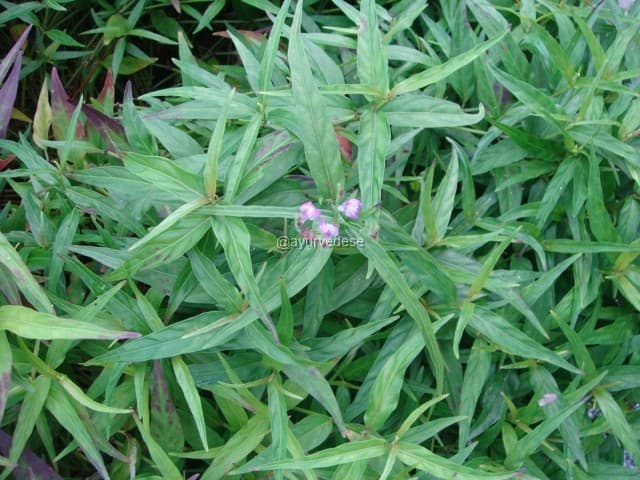
O chambá, também chamado trevo-cumaru ou menta-do-nordeste, é a *Justicia pectoralis*, uma erva da tradição popular brasileira. Na leitura ayurvédica, é vista como erva que reduz o excesso de Kapha nos pulmões (kaphahara), alivia a tosse (kāsahara) e a falta de ar (śvāsahara) e acalma a mente (m…

View in catalog →

Sloka of the day

वितर्कविचारानन्दास्मितारूपानुगमात्संप्रज्ञातः॥

The cognitive samādhi (samprajñāta) [progresses] through the presence of [4 factors]: vitarka, vicāra, ānanda, asmitā.

1 17

Patañjali offers the "internal map" of samādhi with an object. The 4 stages are progressively subtler: vitarka (with gross thought of the object); vicāra (with subtle thought); ānanda (with refined bliss of the subject); asmitā (with only the pure sense of "I am"). Principle: even within samādhi, there is gradation. The meditator's progressive maturation is to internalize this hierarchy.

To practice today

Reflita sobre em qual estágio da meditação você se encontra e como pode progredir para o próximo nível.

Podcast episode

Especial - Kriya Yoga De Babaji

Neste episódio, aproveitei que a querida amiga *Nagalakshmi Devi* estava em Brasília dando iniciação em Kriya Yoga de Babaji e marquei com ela um bate-papo em que abordamos essa…

Listen on Spotify
Share: